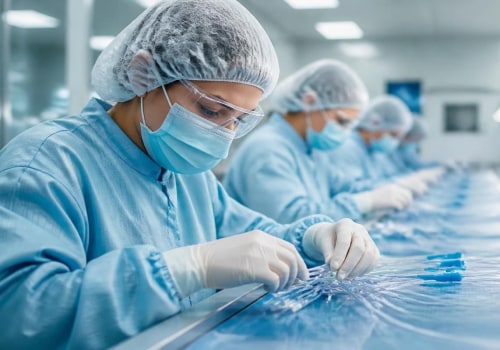
The advent of 3D printing has revolutionized various industries, and medical device manufacturing stands at the forefront of this transformation. This innovative technology allows for the creation of complex structures that were previously impossible or prohibitively expensive to produce using traditional manufacturing methods. By enabling rapid prototyping and customization, 3D printing is not just enhancing the efficiency of production processes but also significantly improving patient outcomes. In the realm of medical device manufacturing, 3D printing facilitates the development of tailored solutions that meet individual patient needs. For instance, orthopedic implants can be designed to fit the unique anatomy of a patient, leading to better integration and reduced recovery times.
Furthermore, the ability to quickly iterate designs means that manufacturers can respond to feedback and make improvements in real-time, a stark contrast to the lengthy timelines associated with conventional manufacturing. As we delve deeper into this topic, it becomes clear that the impact of 3D printing extends beyond mere cost savings and efficiency gains. It is reshaping how medical devices are conceptualized, designed, and produced, paving the way for innovations that could redefine healthcare delivery. Understanding these implications is crucial for stakeholders in the medical field as they navigate this rapidly evolving landscape.
Understanding Medical Device Manufacturing
The medical device manufacturing process is a complex and highly regulated field that involves several stages, from design to production and distribution. Understanding this process is crucial for appreciating the transformative impact of technologies like 3D printing.At its core, the manufacturing process typically begins with the design phase, where engineers and designers collaborate to create prototypes.These prototypes are essential for testing functionality and ensuring compliance with regulatory standards. Following design, the production phase involves various methods such as injection molding, machining, and increasingly, 3D printing.
Types of Medical Devices
- Class I Devices: These are low-risk devices such as bandages and handheld surgical instruments.
- Class II Devices: Moderate-risk devices like infusion pumps and diagnostic equipment require more stringent regulations.
- Class III Devices: High-risk devices such as pacemakers and implantable defibrillators undergo rigorous testing and approval processes.
Regulatory Considerations
The regulatory landscape for medical device manufacturing is governed by agencies such as the FDA in the United States. Manufacturers must adhere to strict guidelines that ensure product safety and effectiveness.This includes conducting clinical trials, maintaining quality management systems, and submitting detailed documentation for approval.In recent years, the integration of 3D printing into medical device manufacturing has introduced new opportunities for customization and rapid prototyping. However, it also raises unique regulatory challenges that manufacturers must navigate to ensure compliance while leveraging this innovative technology.In summary, understanding the intricacies of the medical device manufacturing process, including the types of devices produced and the regulatory framework in place, is essential for recognizing how 3D printing can revolutionize this industry.
The Basics of 3D Printing Technology
3D printing technology, also known as additive manufacturing, has revolutionized various industries, including medical device manufacturing. This innovative process involves creating three-dimensional objects layer by layer from a digital model, allowing for unprecedented customization and complexity in design.At its core, 3D printing utilizes several methods, each with unique advantages:- Fused Deposition Modeling (FDM): This is one of the most common methods, where thermoplastic materials are heated and extruded through a nozzle to build objects layer by layer. FDM is particularly useful for prototyping and producing durable parts.
- Stereolithography (SLA): SLA employs a laser to cure liquid resin into solid form.
This method is known for its high precision and smooth surface finish, making it ideal for intricate medical devices.
- Selective Laser Sintering (SLS): SLS uses a laser to fuse powdered materials, such as plastics or metals, into solid structures. This technique is beneficial for creating complex geometries that are often required in medical applications.
- Digital Light Processing (DLP): Similar to SLA, DLP uses a digital light projector to cure resin. It offers faster printing speeds and is suitable for producing high-resolution parts.
This agility not only enhances innovation but also enables manufacturers to respond swiftly to regulatory changes and evolving market demands.In summary, understanding the fundamentals of 3D printing technology and its various methods is crucial for leveraging its potential in medical device manufacturing. As this technology continues to advance, it promises to further transform how medical devices are designed and produced, ultimately improving patient outcomes.
Advantages of 3D Printing in Medical Device Manufacturing
The integration of 3D printing into medical device manufacturing has revolutionized the industry, offering numerous advantages that enhance both production efficiency and product quality. One of the most significant benefits is cost-effectiveness. Traditional manufacturing methods often involve high setup costs and lengthy production times, particularly for small batches.In contrast, 3D printing allows for rapid prototyping and production without the need for expensive molds or tooling. This reduction in overhead costs makes it feasible for companies to produce customized devices at a fraction of the traditional cost.Another key advantage is the ability to achieve unparalleled customization. Medical devices often need to be tailored to meet the specific needs of individual patients. With 3D printing, manufacturers can easily create bespoke solutions, such as prosthetics or implants that fit perfectly to a patient's anatomy.
This level of personalization not only improves patient outcomes but also enhances satisfaction and compliance.Furthermore, 3D printing significantly accelerates the prototyping process. Manufacturers can quickly iterate designs based on feedback or testing results, allowing for faster innovation cycles. This agility is crucial in the medical field, where timely access to new technologies can save lives.In summary, the advantages of 3D printing in medical device manufacturing include:
- Cost savings: Reduced production costs and elimination of expensive tooling.
- Customization: Tailored solutions for individual patient needs.
- Faster prototyping: Quick iterations lead to accelerated innovation.
Challenges and Limitations of 3D Printing in Medical Devices
While 3D printing offers transformative potential for medical device manufacturing, it is not without its challenges and limitations. Understanding these hurdles is essential for manufacturers looking to integrate this technology effectively.Quality Control Issues
One of the primary concerns in medical device manufacturing using 3D printing is maintaining consistent quality.Unlike traditional manufacturing methods, where processes are well-established and controlled, 3D printing can introduce variability due to factors such as:
- Material inconsistencies: Different batches of printing materials can have varying properties, affecting the final product's performance.
- Printer calibration: Regular calibration is necessary to ensure that printers produce accurate and reliable results, which can be time-consuming.
- Environmental factors: Temperature and humidity can impact the printing process, leading to defects in the final device.
Regulatory Challenges
The regulatory landscape for medical devices is complex and stringent. Manufacturers must navigate a maze of regulations that govern the safety and efficacy of medical products. The introduction of 3D printing complicates this process due to:- Lack of established guidelines: Regulatory bodies are still developing frameworks specifically for 3D-printed devices, leading to uncertainty in compliance.
- Documentation requirements: Manufacturers must provide extensive documentation to demonstrate that their 3D-printed devices meet safety standards, which can be resource-intensive.
Technical Limitations
Despite advancements in technology, there are inherent technical limitations associated with 3D printing in medical device manufacturing. These include:- Material limitations: Not all materials suitable for traditional manufacturing are compatible with 3D printing, restricting design options.
- Size constraints: The size of the printer limits the dimensions of the devices that can be produced, which may not meet all clinical needs.
Manufacturers must invest in quality control measures, stay abreast of regulatory changes, and understand the technical limitations to fully leverage this innovative technology.
Case Studies: Successful Applications of 3D Printing in Medical Devices
The integration of 3D printing into medical device manufacturing has led to numerous innovative applications that demonstrate its transformative potential. Below are some notable case studies that highlight the successful use of 3D printing in this field.1.Customized Prosthetics
A leading example is the development of customized prosthetic limbs by companies like Open Bionics. Utilizing 3D printing technology, they create prosthetics tailored to the unique anatomy of each patient. This not only enhances comfort but also significantly reduces production costs and time, allowing for quicker delivery to patients in need.2.Surgical Models
Materialise, a pioneer in 3D printing solutions, has successfully produced patient-specific surgical models that aid in pre-operative planning.By using CT scans, they create accurate replicas of patients' anatomy, enabling surgeons to practice complex procedures beforehand. This approach has been shown to improve surgical outcomes and reduce operation times.
3.Bioprinting Tissues
Another groundbreaking application is found in the realm of bioprinting, where companies like Organovo are developing 3D-printed human tissues for medical research and drug testing. These tissues mimic real human organs, providing a more accurate platform for testing pharmaceuticals, which can lead to better drug development processes.4.Dental Applications
The dental industry has also embraced 3D printing with companies such as Align Technology, which produces clear aligners using advanced 3D printing techniques. This allows for precise customization based on individual dental scans, improving patient satisfaction and treatment efficacy.These case studies illustrate the profound impact of 3D printing on medical device manufacturing, showcasing how this technology not only enhances customization and efficiency but also paves the way for innovative solutions that improve patient care.Future Trends in 3D Printing and Medical Device Manufacturing
The future of 3D printing in medical device manufacturing is poised for transformative advancements that promise to enhance patient care and streamline production processes.As technology evolves, several key trends are emerging that will shape the landscape of this industry.
Personalized Medical Devices
One of the most significant trends is the shift towards personalized medical devices. With the ability to create custom implants and prosthetics tailored to individual patient anatomy, 3D printing allows for improved fit and functionality. This personalization not only enhances patient comfort but also increases the effectiveness of treatments.Bioprinting Innovations
Another exciting area is bioprinting, which involves the use of living cells to create tissues and organs. As research progresses, we may see breakthroughs in creating viable organs for transplantation, significantly reducing waiting lists and improving outcomes for patients with organ failure.On-Demand Production
The concept of on-demand production is also gaining traction.By utilizing 3D printing, manufacturers can produce medical devices as needed, reducing inventory costs and waste. This flexibility allows for rapid prototyping and quicker responses to market demands.
Sustainability in Manufacturing
Sustainability is becoming a critical focus in medical device manufacturing. 3D printing can contribute to more sustainable practices by minimizing material waste and enabling the use of biodegradable materials. As healthcare systems strive for greener solutions, this trend will likely gain momentum.Regulatory Advances
As these technologies evolve, so too will the regulatory frameworks governing them.Future predictions suggest that regulatory bodies will adapt to accommodate the unique challenges posed by 3D printed devices, ensuring safety while fostering innovation.In conclusion, the intersection of 3D printing and medical device manufacturing is set to revolutionize healthcare. With personalized solutions, bioprinting advancements, on-demand production capabilities, sustainability efforts, and evolving regulations, the future holds immense potential for improving patient outcomes and transforming the industry.
FAQs About 3D Printing and Medical Device Manufacturing
As the integration of 3D printing into medical device manufacturing continues to evolve, several questions arise regarding its implications, benefits, and limitations. Here are some frequently asked questions that help clarify common misconceptions and provide deeper insights.What are the main advantages of using 3D printing in medical device manufacturing?
- Customization: 3D printing allows for the creation of highly customized devices tailored to individual patient needs, enhancing comfort and effectiveness.
- Cost Efficiency: It can reduce production costs by minimizing material waste and lowering the need for extensive tooling.
- Rapid Prototyping: The technology enables faster prototyping, allowing manufacturers to iterate designs quickly and efficiently.
Are there any limitations to 3D printing in this field?
- Material Constraints: Not all materials used in traditional manufacturing are suitable for 3D printing, which can limit design options.
- Regulatory Challenges: The regulatory landscape for 3D printed medical devices is still developing, which can complicate the approval process.
- Quality Control: Ensuring consistent quality across batches can be challenging due to variations in the printing process.
What are some common misconceptions about 3D printing in medical device manufacturing?
- Misconception 1: 3D printing is only suitable for prototypes. This is false; it is increasingly used for final products as well.
- Misconception 2: All 3D printed devices are inferior in quality.
This is not true; many 3D printed devices meet or exceed traditional manufacturing standards.
- Misconception 3: 3D printing will replace traditional manufacturing entirely. This is unlikely; instead, it will complement existing methods.
Conclusion: The Future of Medical Device Manufacturing with 3D Printing
As we look towards the future of medical device manufacturing, it is clear that 3D printing is poised to play a pivotal role in transforming the industry. The ability to create customized devices tailored to individual patient needs not only enhances treatment outcomes but also streamlines production processes.Throughout this discussion, we have explored several key advantages of integrating 3D printing into medical device manufacturing. These include:- Customization: 3D printing allows for the production of bespoke devices that fit the unique anatomical requirements of patients, leading to improved comfort and efficacy.
- Cost Efficiency: By reducing material waste and enabling on-demand production, 3D printing can significantly lower manufacturing costs, making advanced medical devices more accessible.
- Rapid Prototyping: The speed at which prototypes can be developed and tested accelerates innovation, allowing manufacturers to bring new products to market faster than traditional methods.
- Simplified Supply Chains: With the ability to produce devices locally, 3D printing minimizes reliance on complex supply chains, reducing lead times and logistical challenges.
Innovations such as bioprinting and the use of advanced biomaterials are already paving the way for groundbreaking applications in regenerative medicine and surgical implants.In conclusion, the integration of 3D printing into medical device manufacturing is not just a trend; it represents a fundamental shift in how medical devices are designed, produced, and delivered. As stakeholders across the healthcare spectrum embrace these changes, we can anticipate a future where personalized medicine becomes the norm, ultimately improving patient care and outcomes.